


What's Happening at 1 Year
At one year, toddlers have done a great job of building their brains into learning machines. Now they're ready to start absorbing all kinds of knowledge. Their memories are better, they have a better handle on their bodies, and many of them are ready to build a basic vocabulary.
Body awareness is developing. Your toddler is fully aware of their own actions and their effects on their environment. They spend time observing how they move their hands and feet, experimenting with both sides of their body. They don't know it yet, but they're starting the process of deciding whether they're left-handed, right-handed, or ambidextrous.
The imitation drive is strong. Your one-year-old is sorting out their identity by mimicking the things they see you and others doing. They may like to play pretend that they're on the phone, or using the TV remote. And they're listening and understanding almost everything you say — even if they can't yet say it back.
What's Developing Right Now
The highlights across all three development pillars at 1 Year.

Physical
Fully aware of own actions and their effects · Complex fine motor — moving obstacles while reaching for something · Left/right hand preference beginning to emerge

Cognitive
Makes things happen deliberately and repeats them with glee · Memory building rapidly — may know up to 50 words if speaking early · Points to correct body parts when asked

Social & Emotional
Understands almost everything you say · Imitating adult activities — toy phone calls, pretend cooking · Listening and absorbing everything
1 Year Development Areas
Sensory Development
Sensory Development
At 12 months, your toddler is likely completely aware of their own actions and their effects on their environment. They spend time observing how they move their hands and feet, experimenting with both sides of their body — starting the process of establishing handedness.
What you can do: Offer bilateral activities — clapping, holding two objects, banging two blocks together. Note which hand they reach with most consistently — you may already see a preference forming.
Gross Motor Skills
Gross Motor Skills
Gross motor development builds progressively through the first year. The strength and coordination your baby is developing right now through tummy time, reflexive movement, and daily activity is laying the foundation for crawling, standing, and walking ahead.
Fine Motor Skills
Fine Motor Skills
Twelve-month-olds are starting to manipulate their environments using more complex fine motor movements. Your toddler may be able to move an obstacle out of the way while reaching for a toy, showing the ability to split focus between a goal and an obstacle — a sophisticated dual-task cognitive/motor milestone.
What you can do: Set up simple reach-around challenges. Place a favourite toy behind a soft obstacle. Let them work out how to get to it.
Balance & Coordination
Balance & Coordination
Balance and coordination milestones begin to emerge from Month 6 when sitting develops. The foundations are being built right now through tummy time, reflexive movement, and your baby's growing muscle strength.
Curiosity & Discovery
Curiosity & Discovery
Object curiosity and deliberate exploration build steadily through the first months. Your baby is taking in everything through observation right now — every face, sound, and sensation is being catalogued and processed by their rapidly developing brain.
Imagination & Creativity
Imagination & Creativity
Imaginative and creative development begins to emerge around 12–18 months. Right now, your baby is building the sensory and cognitive foundations that will support creativity later.
Thinking & Problem Solving
Thinking & Problem Solving
Your toddler loves to make things happen! They know their actions affect their environment and are constantly experimenting. They'll be delighted by their ability to make a noisy mess by knocking over blocks and will repeat actions like that over and over.
What you can do: Let them knock things down, knock them down again, and knock them down a third time. The repetition is how they confirm their understanding of cause and effect.
Academics
Academics
Your 12-month-old's memory is getting better every day. If they've started talking early, they might now know about 50 words. They're packing in factual knowledge and are now able to point to the correct body parts when you ask: "Where's your nose?"
What you can do: Play "Where is...?" games consistently. Point to your own nose while saying "nose," then ask them to point to theirs. Body part recognition is one of the clearest academic milestones of this stage.
Sharing & Cooperation
Sharing & Cooperation
Social sharing and cooperation emerge from Month 6 onward. Right now the most important social development is the bond forming between your baby and their primary caregivers through consistent, responsive, and loving care.
Listening & Communication
Listening & Communication
Careful what you say — your little toddler is listening and understands almost everything, even if they haven't mastered speaking yet. They're very busy absorbing everything you have to tell them. It's a great time for teaching.
What you can do: Narrate everything. "We're going to put on your shoes now. First this foot, then that one. Now we're ready to go." Every sentence is input for their rapidly developing language system.
Self-Expression & Confidence
Self-Expression & Confidence
Monkey see, monkey do! Your one-year-old is sorting out their identity by mimicking the things they see you and others doing. They may like to play pretend that they're on the phone, or using the TV remote.
What you can do: Provide toy versions of the adult objects they're most fascinated by — a toy phone, a toy remote, play kitchen items. This pretend play is identity exploration and cognitive development in one.
Security & Happiness
Security & Happiness
Security and happiness are built through consistent, responsive caregiving in the early months. Every time you respond to your baby's cries, you are building the secure attachment that underpins all future emotional development.
Recommended Toys & Books for 1 Year

Melissa & Doug First Shapes Jumbo Knob Puzzle

Leapfrog Learning Friends 100 Words Book English/French

Bluey 12, 16, 20, 24 pc Puzzles

Magnetic Wooden Maze: Jungle

Bright Box 2: First Steps & Early Words


100 First Words: Nature: With Flaps to Lift

Ravensburger My First Puzzles On The Farm 2, 3, 4, 5 pc Puzzles


Melissa & Doug Basic Skills Board
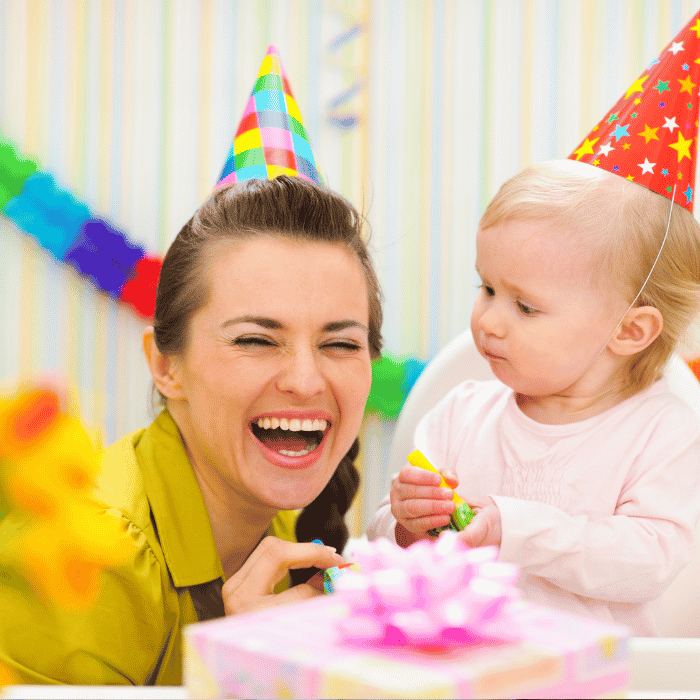
How to Play with Your 1-Year-Old
- First steps encouragement — Arms out, their name called, let them toddle toward you. The best walking motivation is a loving face at the end.
- Pretend play starter — A toy phone, a doll, a play spoon. Twelve-month-olds are ready to imitate the adult world in miniature.
- Simple puzzles — 2–3 piece chunky wooden puzzles with knobs. This age is cognitively ready.
- "Where is...?" games — "Show me the dog." "Where's your nose?" "Can you find the ball?" Builds receptive vocabulary and body part awareness.
The milestones on this page are intended for educational reference only. Every child develops at their own pace — earlier or later than described here is often completely typical. If you have concerns about your child's development, please speak with your paediatrician. Bright Bean Toys does not provide medical advice.

