


What's Happening at 18 Months
The first half of a child's second year is a time of big development and big emotions. Most children master walking, and though speech may be advancing, many toddlers at 18 months primarily use gestures and posture alongside words to communicate. Their growing curiosity drives them to point at things and give questioning looks, eager to share and discover together.
The emotional landscape at 18 months is vivid and intense. Your toddler is aware enough to want independence, but not yet capable enough to always achieve it — and that gap is the source of most 18-month-old frustration. Tantrums are a neurological inevitability at this stage, not a parenting failure.
Vocabulary is building rapidly. If they started talking early, they may now have 50–200 words. More importantly, they understand far more than they can say. They're learning new words at an increasing rate and will gladly participate in observing something interesting with you — they're learning from how you react.
What's Developing Right Now
The highlights across all three development pillars at 18 Months.

Physical
Walking confidently · Pinching, gripping, poking — fine motor improving · Crayons and toy instruments are favourite objects right now

Cognitive
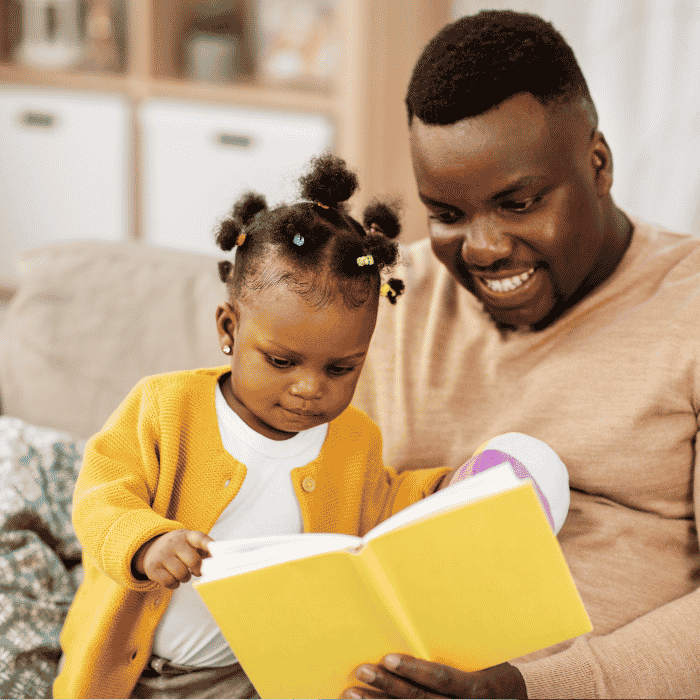
Explorer mode in full force · Up to 200 words if early talker · Loves being read to and looking at pictures in books · Crayons producing more regular marks

Social & Emotional
Tantrums have arrived — and are developmentally expected · Kisses, snuggles, and hugs expressing affection · Full range of emotions being sorted through
18 Months Development Areas
Sensory Development
Sensory Development
Your one-year-old's senses are sharper than ever, and they're drawn to various interesting sights and sounds. They'll pay attention to music, and spend time watching objects and people that capture their interest. Take the time to experience these things together — they're eager to share the things they see and hear, learning from how you react.
What you can do: Share music, nature, interesting objects. Narrate your reactions: "Oh, that dog is so big! Did you see that?"
Gross Motor Skills
Gross Motor Skills
At some point between one year and a year and a half, your little one will start walking with confidence. This new skill opens up their ability to explore the environment dramatically. They can't run yet, but they might try.
What you can do: Encourage walking to destinations rather than carrying. "Can
Fine Motor Skills
Fine Motor Skills
Pinching, gripping, poking, and letting go — your little one is getting better and better at using their hands and fingers. Don't toss out the sippy cup yet — they're still getting the hang of their new fine motor abilities and will make plenty of fumbles. That's all part of the learning process.
What you can do: Offer activities that require pinching and precise grasping — puzzles, stickers, turning pages in books.
Balance & Coordination
Balance & Coordination
Balance and coordination milestones begin to emerge from Month 6 with sitting. The foundations are being built through tummy time and reflexive movement right now.
Curiosity & Discovery
Curiosity & Discovery
Your little one wants to learn about everything. They've got an inquisitive mind and the heart of an explorer. With new mobility, they're more focused in their exploration and will rely on you to help make sense of what they discover. They may point at things, making inquisitive gestures and sounds.
What you can do: Follow their pointing. Name what they're pointing at. This pointing-and-naming loop is one of the most powerful vocabulary-building mechanisms.
Imagination & Creativity
Imagination & Creativity
Your one-year-old is becoming more creative. They're becoming interested in the arts — happy to spend time experimenting with crayons and pens, making marks on paper (and walls — watch out!). They may also take to exploring the sounds musical instruments make.
What you can do: Provide fat, easy-to-grip crayons and big paper. Offer simple toy instruments. Protect your walls.
Thinking & Problem Solving
Thinking & Problem Solving
Problem solving emerges and deepens progressively through the first year. The neural pathways for thinking, planning, and cause-and-effect understanding are being laid right now through every sensory experience and interaction your baby has.
Academics
Academics
If your toddler started talking early, they now have anywhere from 50 to 200 useful words. They're acquiring a new word every other day or so, and you can help by pointing things out and naming them. Pretty soon, they'll be pointing to things and asking what they're called.
What you can do: Point and name, point and name, point and name. "That's a truck. A big red truck." This labelling is how vocabulary explodes.
Sharing & Cooperation
Sharing & Cooperation
Social sharing and cooperation emerge from Month 6 onward. Right now the most important social development is the bond forming between your baby and their primary caregivers through consistent, responsive, and loving care.
Listening & Communication
Listening & Communication
Your little one likely has a firm grasp of several common words and phrases you use throughout the day. They'll soon be able to follow simple instructions and change their behaviour to match what you say. They're comfortable using their body to communicate when they don't know the right word.
What you can do: Give simple one-step instructions. "Bring me the ball." "Come here." "Put that down." Respond consistently to every attempt at compliance.
Self-Expression & Confidence
Self-Expression & Confidence
Your one-year-old is learning how to express how they feel about you — with kisses, snuggles, and hugs. They're getting to know their full range of emotions, and that's a big challenge. It's during these months that tantrums first appear.
What you can do: Name the emotion: "You're frustrated. I can see that." This emotional labelling builds emotional literacy — the foundation of self-regulation.
Security & Happiness
Security & Happiness
Security and happiness are built through consistent, responsive caregiving in the early months. Every time you respond to your baby's cues, you are building the secure attachment that underpins all future emotional development and wellbeing.
Recommended Toys & Books for 18 Months

Crayola Color Wonder Foldalope with 4 Markers Ms. Rachel – Mess-Free Toddler Art Kit in Envelope (Ages 1+)

Crayola Color Wonder Magic Light Brush with Sound – Ms. Rachel Audio Storytelling Mess-Free Art Set (Ages 1+)


Crayola Broadline Silly Scents Smash Up Markers (10 Count)


Blue's Clues & You! Wooden Music Maker Board

Djeco Animambo Tortoise Cymbal & Xylophone – 2-in-1 Kids Percussion Set with Two Sticks (Ages 18m+)

Bright Box 2: First Steps & Early Words

Crayola Classic Colour Pack Crayons-8 Colours

Crayola Classic Colour Pack Crayons-24 Colours

Crayola Colour & Erase ABC & 123 Flash Cards – Wipe-Clean Letter & Number Learning Cards (Ages 2+)
How to Play with Your 18-Month-Old
- Pretend play — Toy kitchen, toy tools, baby doll with accessories. Imitative play is the primary engine of development at 18 months.
- Outdoor play daily — Walks, gentle running, puddles, grass. The gross motor system needs vigorous outdoor movement every single day.
- First scribbling — Large crayons on big paper. Don't direct — let them make their own marks. This is where the artistic life begins.
- Simple sorting — By colour, size, or type. Sort laundry together. Put blocks in a box. The beginning of categorization thinking.
The milestones on this page are intended for educational reference only. Every child develops at their own pace — earlier or later than described here is often completely typical. If you have concerns about your child's development, please speak with your paediatrician. Bright Bean Toys does not provide medical advice.

