


What's Happening at 2.5–3 Years
Speaking in full sentences, asking questions that demonstrate real clarity and complexity of thought — these are a few of the markers of development during the second half of a child's third year. Things are becoming more clearly defined in the mind of a child this age, and it shows in how they communicate and interact with the world.
Physically, your little one is exploring all kinds of movement — hopping about, climbing stairs one foot at a time, rolling around, navigating obstacles like a pro, going under tables, over ottomans, even crawling through narrow tunnels. They're not falling down much anymore!
Making-believe and storytelling are new skills they're rapidly acquiring. They can follow a simple plot — which means you can start reading more complex picture books. They'll happily spend time using their toys to act out little narratives of their own. And they're starting to use language in creative ways — playing with words, making silly sounds, inventing funny made-up words.
What's Developing Right Now
The highlights across all three development pillars at 2.5-3 Years.

Physical
Hops, climbs stairs one foot at a time, rolls, navigates obstacles · Throwing and catching improving · Balance is solid — rarely falls

Cognitive
Follows a simple plot in picture books · Counts to 5 · 1,000 words understood · Pattern recognition emerging

Social & Emotional
Full sentences with developing grammar · Understands emotions in songs and tone of voice · Dancing spontaneously · Beginning to copy others' actions as primary learning mode
2.5-3 Years Development Areas
Sensory Development
Sensory Development
Sensory processing continues to refine and mature at this stage. Your child is integrating sensory information more efficiently, using what they see, hear, touch, and feel to make increasingly sophisticated sense of the world around them.
Gross Motor Skills
Gross Motor Skills
Your little one is exploring all kinds of movement. They're hopping, climbing stairs one foot at a time, rolling around, navigating obstacles easily — going under tables, over ottomans, through tunnels.
What you can do: Create obstacle courses. Set up safe climbing challenges. Balance beams (a low plank on the floor), hopscotch, simple gymnastic-style movement.
Fine Motor Skills
Fine Motor Skills
Your little one is getting better at using their arms and legs. They can pick up toys from the floor without sitting down, can throw and catch a ball (without consistency — play catch regularly), and can make more regular marks with crayons.
What you can do: Play catch regularly. Offer crayons, markers, and scissors (rounded, child-safe). Teach them to hold the crayon in their fingers rather than their fist.
Balance & Coordination
Balance & Coordination
Your toddler isn't falling down much anymore! They can climb into a chair with no help, go up and down stairs (make them hold the railing), and even jump off a low step or stool.
What you can do: Encourage safe jumping from low heights. Practice one-foot balancing together. Balance is now a game rather than a survival skill.
Curiosity & Discovery
Curiosity & Discovery
Get ready to answer a lot of questions — your toddler is going to be asking them non-stop. They're curious about almost everything and want to explore the unknown. Their curiosity drives constant experimentation — keep a close eye for both safety and the safety of your belongings!
What you can do: Answer every question genuinely. "Why is the sky blue?" deserves a real answer, not "just because." The intellectual respect you show teaches them their curiosity is worth having.
Imagination & Creativity
Imagination & Creativity
Making-believe and storytelling are new skills. They can follow a simple plot — so you can start reading more complex picture books. They'll spend time using toys to act out little narratives of their own. They may also play with words — inventing funny nonsense syllables, playing with sounds.
What you can do: Read picture books with simple plots. Act out the stories together. Build a "stage" from a cardboard box for puppet shows.
Thinking & Problem Solving
Thinking & Problem Solving
Pattern recognition is a growing skill, laying the foundation for mathematics. Your two-year-old is learning to match similar objects and sort different ones into groups. They understand size and can readily sort small toys from large ones.
What you can do: Play sorting games with everyday objects. "Let's put all the red things together." "Can you find all the round shapes?" Pattern identification games build mathematical thinking naturally.
Academics
Academics
Your toddler is getting smarter by the day! They can count to five and understand up to a thousand words. They understand spatial relationships — "on top," "inside," "next to" — and their memory is excellent: they'll tell you what's on the next page of favourite books. If alone with a book or magazine, they'll flip through it, mimicking the act of reading.
What you can do: Practise counting objects together. Use spatial language constantly: "Put it on top of the box." "The ball is next to the chair." This builds mathematical and linguistic foundations simultaneously.
Sharing & Cooperation
Sharing & Cooperation
Social skills and cooperative play continue to develop at this stage through peer interaction, group activities, and guided conflict resolution. Helping your child talk through disagreements rather than solving conflicts for them builds the social intelligence that lasts a lifetime.
Listening & Communication
Listening & Communication
Your little one is becoming a good communicator. Increasing command of language allows them to be understood easily, and they're starting to use sentences with proper grammar. They can answer questions like "Where did you find this?" or "How did you make that?" They also understand others' emotions from their tone or the mood of a song.
What you can do: Ask open-ended "how" and "where" questions. Let them explain things to you. The act of explaining builds language and thinking simultaneously.
Self-Expression & Confidence
Self-Expression & Confidence
Your toddler enjoys copying other people's actions — one of the main ways they learn. They've started dancing when the mood strikes, trying out new ways to move like tumbling and walking in silly ways.
What you can do: Dance together. Be silly together. Model the expressive behaviours you want to see — creativity, humour, physical expressiveness.
Security & Happiness
Security & Happiness
Emotional security continues to be built through consistent routines, predictable responses, and a safe relationship with primary caregivers at this stage. Your calm, steady presence is the most important source of security your child has as they navigate an increasingly complex world.
Recommended Toys & Books for 2.5-3 Years

My First Coloring Book (Ms. Rachel)

Learning Resources Puzzle Card PreK Bundle

Leapfrog LeapStart® Level 1: CoComelon™ Sing and Learn


Bright Box 2: First Steps & Early Words

No Hitting!: A Lift-The-Flap Book


Melissa & Doug First Shapes Jumbo Knob Puzzle

Ms. Rachel and the Special Surprise - Hardcover with Jacket: Encouraging Speech and Learning Through Play and Music

Melissa & Doug Dinosaur Wooden Jigsaw Puzzle

Hide and Seek with Herbie (Ms. Rachel)

Play-Doh Photo Fun Toy Camera Starter Set
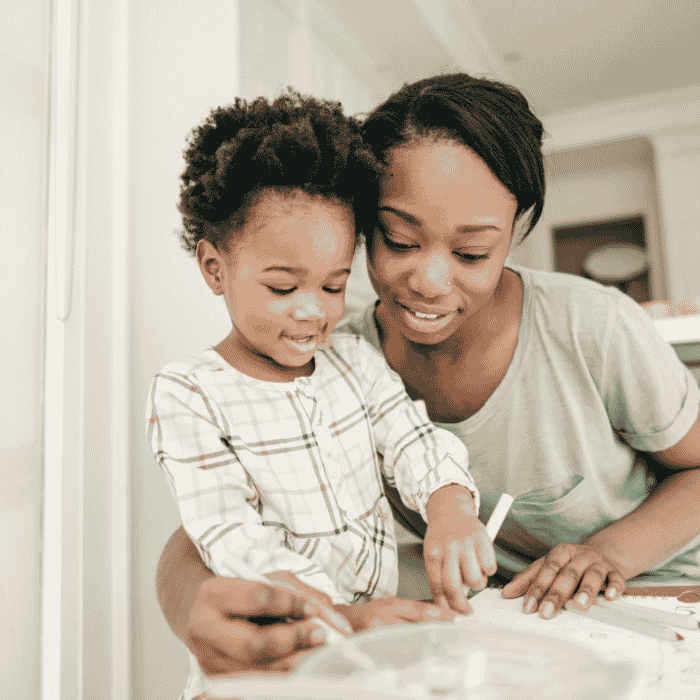
How to Play with Your 2.5-3 Years
- Open-ended building — Blocks, magnetic tiles, loose parts. No instructions, no single solution. Pure creativity and spatial reasoning.
- Dress-up box — A box of costumes and accessories. Your child will create the rest. Costume play is identity exploration and narrative building simultaneously.
- Simple board games — First Orchard, Snail's Pace Race, simple memory games. Turn-taking and rule-following in a fun, low-stakes context.
- Drawing with intent — Ask "what are you drawing?" The stories and explanations at this age are extraordinary. Keep examples in a folder — you'll treasure them.
The milestones on this page are intended for educational reference only. Every child develops at their own pace — earlier or later than described here is often completely typical. If you have concerns about your child's development, please speak with your paediatrician. Bright Bean Toys does not provide medical advice.

