


What's Happening at 4 Years
At age four, your child's confidence makes a big jump. With near-mastery of motor skills, an increased attention span, and a lot more independence, they'll approach new experiences and learning with genuine eagerness. There's a good reason kindergarten is reserved for four-year-olds — this is when children can really start digging into learning.
The big moment you've been waiting for is approaching: many children start reading this year. Not all — and there is no need for concern if reading doesn't begin at four — but the pre-literacy foundations are solidly in place and the transition to actual reading often happens during this year or shortly after.
Socially, four-year-olds have developed a sense of empathy — showing appropriate concern when another child is upset or hurt. They're able to cooperate with a group of kids well enough to spend long stretches in collaborative play, and their friendships are becoming more meaningful.
What's Developing Right Now
The highlights across all three development pillars at 4 Years.

Physical
Holds pencil properly · Hand-eye coordination major upgrade · Threading beads, building intricate structures — precision everywhere · Sports, swimming, skating becoming possible

Cognitive
A scientist — makes plans, tests them, learns from failure, tries again · Art becoming realistic · Many children start reading this year!

Social & Emotional
Empathy arrives — shows real concern when a peer is hurt · Cooperates with groups for long stretches · Conversations are becoming genuinely reciprocal
4 Years Development Areas
Sensory Development
Sensory Development
Sensory processing is well established at this stage. Your child is using their senses in increasingly sophisticated ways — observing details, making comparisons, and using sensory information to fuel curiosity and learning across all areas of development.
Gross Motor Skills
Gross Motor Skills
One word: sports! Confident gross motor control means ability to participate in sports with other children. At four, your child can begin to learn how to swim, skate, dance, ski. The base ability for large movements is well established by the end of this year. Any improvement from now on is mainly due to increased strength and practice.
What you can do: Enrol in a sport, dance class, or swimming lessons. The social and physical benefits of organized sports at four are well-documented.
Fine Motor Skills
Fine Motor Skills
This year is all about precision. Your four-year-old will develop enough fine motor control to learn how to hold a pencil properly. Hand-eye coordination gets a massive upgrade. They can build more complex and intricate structures from blocks, use tools effectively, and thread small beads onto string.
What you can do: Teach the proper pencil grip — use a pencil grip aid if needed. Offer beading activities. Build together with small pieces. The fine motor precision developed this year is the foundation for all future writing.
Balance & Coordination
Balance & Coordination
Your toddler isn't falling down much anymore! They can climb into a chair with no help, go up and down stairs (make them hold the railing), and even jump off a low step or stool.
What you can do: Encourage safe jumping from low heights. Practice one-foot balancing together. Balance is now a game rather than a survival skill.
Curiosity & Discovery
Curiosity & Discovery
This year you'll witness a tremendous expansion of your child's horizons. A much longer attention span means they can focus on activities for longer. Curiosity about experiences they observe or hear about others having will also increase. Their ability to learn about objects and events by discussing observations and making comparisons will expand significantly.
What you can do: Take them on "learning trips" — a museum, a farm, a fire station. Their attention span can now sustain a real learning outing.
Imagination & Creativity
Imagination & Creativity
Your child's imagination is becoming a more defined place. They're using it for more complex pretend play, showing remarkable ability to think outside the box. Their artistic inclinations are moving toward realism — you may not have to ask what they've drawn anymore! They use art to tell stories. Musical ability may blossom this year, along with understanding of pitch and rhythm.
What you can do: Ask them to draw real things — their house, their family, their pet. Ask them to describe what they've made. You'll see them placing real details into imaginary scenes.
Thinking & Problem Solving
Thinking & Problem Solving
Your four-year-old is a scientist. This year brings the ability to make and follow plans to accomplish tasks. They learn from past experiences, including failures, and explain what happened. When things don't work out, there's a willingness to re-think and try something new. Willingness to fail and try again is one of the best early indicators of future success.
What you can do: Let them fail. Resist the urge to fix it. "That didn't work — what could you try instead?" is more valuable than any solution you could offer.
Academics
Academics
This is the year many children start to learn to read, write, and count. Your four-year-old may be able to identify and reproduce many letters, numbers, and shapes. By the end of the year, they'll likely know the alphabet and be able to count to 10. They may understand concepts of less and more. They may even start to write, stringing letters together.
What you can do: Read aloud daily. Point to words as you read them. Play letter recognition games. Count everything with them. The more you naturally integrate literacy and numeracy into daily life, the more natural it feels to them.
Sharing & Cooperation
Sharing & Cooperation
Your little one will continue honing social skills. They'll cooperate with a group well enough to spend long stretches in games or pretend play, and will form stronger friendships. Your four-year-old will develop empathy — showing appropriate concern when another child is upset or hurt. They may suggest solutions to peers' problems.
What you can do: Talk about others' feelings regularly: "How do you think she felt when that happened?" This perspective-taking practice directly builds empathy.
Listening & Communication
Listening & Communication
Your child's ability to communicate will leap forward. Along with vocabulary growth, they'll use more complex sentences to share thoughts, feelings, and ideas. They may understand some figures of speech. They'll become a better conversationalist — initiating conversations, waiting for others to finish speaking.
What you can do: Have real conversations at the dinner table. Ask about their day using open-ended questions. "What was the most interesting thing that happened today?" Model turn-taking and active listening.
Self-Expression & Confidence
Self-Expression & Confidence
Though four-year-olds still need adults as role models, confidence in their own actions is growing. You may see them wanting to choose their own clothing, for example. Being allowed to make their own decisions in appropriate situations will help them become more self-sufficient. Four-year-olds are quite good at expressing themselves verbally — they're not shy about making their needs and preferences known.
What you can do: Offer choices within appropriate limits. "Would you like the red shirt or the blue one?" Two controlled choices build decision-making confidence.
Security & Happiness
Security & Happiness
Kindergarten starts this year — a big change. New kids, a new teacher, maybe the first time away from you for an extended period. Four-year-olds have developed tools to adapt to changes like this. They can tolerate time away from you better than ever. They can get feelings out through talking or drawing.
What you can do: Prepare for school transitions by talking about what to expect. "Your teacher will be there. You'll have a cubby for your things. I'll be there to pick you up at 3." Predictability reduces anxiety.
Recommended Toys & Books for 4 Years

Kids First Aircraft Engineer


Learning Resources All Ready for Kindergarden Readiness Kit

LEGO DUPLO Classic Colourful Creative Box (10479) | DUPLO Classic Building Set for Ages 2+

Get Ready for Kindergarten, Curious George

LeapFrog Pick Up & Count Vacuum

Going to Kindergarten Book for Kids!: Get Ready for Fun Firsts and Exciting Adventures

Bright Box 3: Toddler Independence & Imaginative Play


Lego Duplo Daily Routines: Eating & Bedtime (10414)

Kids First Automobile Engineer
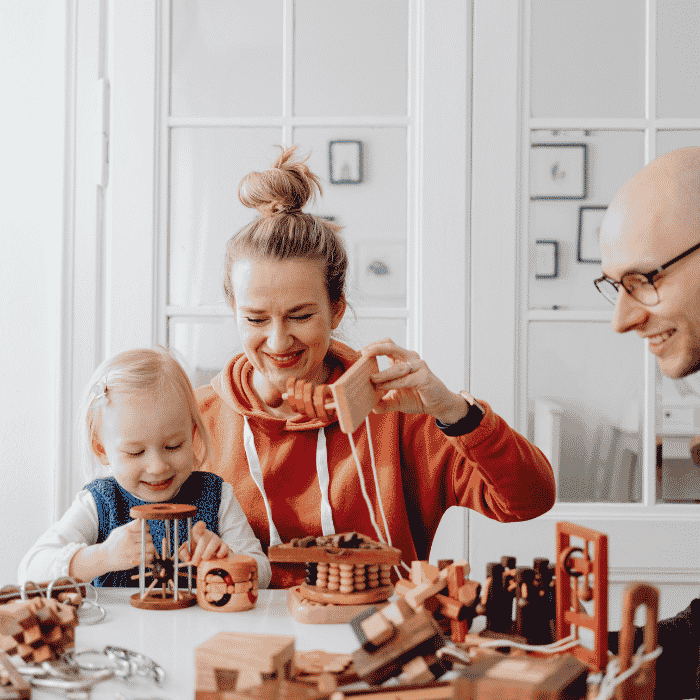
How to Play with Your 4 Year Old
- STEM exploration — Simple experiments, building challenges, nature collections. The curiosity and the attention span are both ready.
- Board games with decisions — Games where your child decides their moves. The beginning of strategic thinking.
- Writing practice — Offer every opportunity. Name on artwork, a birthday card, a grocery list. Functional writing motivates more than worksheets.
- Extended pretend play — The same scenario can now continue across multiple days. A "hospital" can be set up Monday and still be running Wednesday. Support this continuity.
The milestones on this page are intended for educational reference only. Every child develops at their own pace — earlier or later than described here is often completely typical. If you have concerns about your child's development, please speak with your paediatrician. Bright Bean Toys does not provide medical advice.

