


What's Happening at 2-2.5 Years
During these months, children generally become very aware of themselves as distinct from others. Self-centred, wilful behaviour tends to surface. Although it can be frustrating for parents and caregivers to be on the receiving end of the "terrible twos," it's an important stage that forms the basis for a child's independence and self-awareness. There are countless opportunities for teaching how behaviour affects others.
Physically, your two-year-old can really move. They run confidently (though not fast), walk backwards and sideways, jump up and down in one spot with both feet, and have found that riding-toys and trikes are a new tool for getting around.
Language is also advancing rapidly. Your two-year-old's vocabulary is growing larger and larger and they're using more and more simple two-word sentences. They like picture books and enjoy discussing the illustrations. Toward the end of these months they may begin telling their own version of a story based on the pictures.
What's Developing Right Now
The highlights across all three development pillars at 2-2.5 Years.

Physical
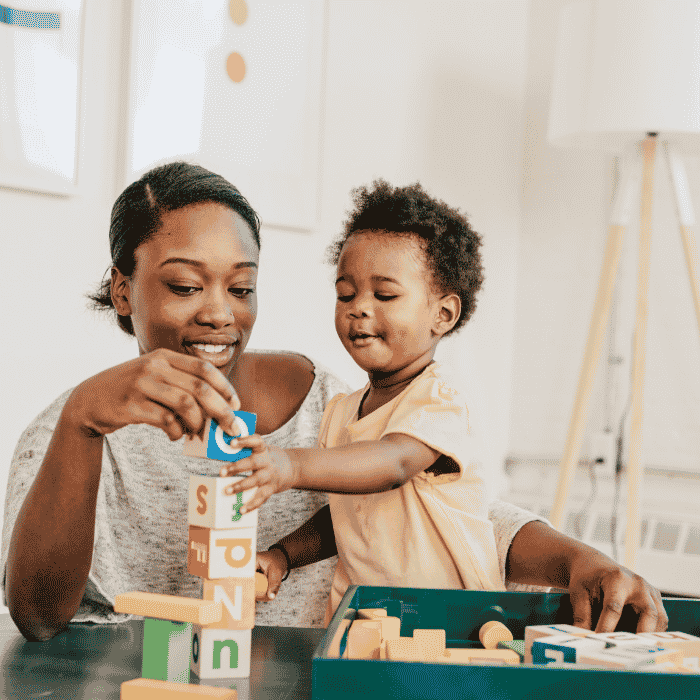
Runs, jumps, walks backwards and sideways · Riding toys and tricycles · Building block towers and stringing beads

Cognitive
Dramatic play with others — simple pretend scenarios · Understands "safe" vs "dangerous" · Can follow 2-step instructions and complete simple puzzles

Social & Emotional
"Me" and "you" — identity and pronouns emerging · Plays beside others but not yet with them · "Do it myself!" — independence drive at full force
2-2.5 Years Development Areas
Sensory Development
Sensory Development
Sensory processing continues to refine and mature at this stage. Your child is integrating sensory information more efficiently, using what they see, hear, touch, and feel to make increasingly sophisticated sense of the world around them.
Gross Motor Skills
Gross Motor Skills
Your two-year-old can really move! They run confidently, walk backwards and sideways, jump up and down in one spot, and have found that riding toys are a new tool for getting around. They can climb on and use both feet to make their vehicles move.
What you can do: Time at the park daily — swings, slides, climbing structures. A tricycle or balance bike. Active outdoor play is non-negotiable at this age.
Fine Motor Skills
Fine Motor Skills
Your little one is getting better at the small movements needed for detailed tasks. They can build short block towers and string beads onto yarn. Their pincer grip is more practised — they can open a jar with a wrist twist. They even scribble with crayons, making more regular, less random marks.
What you can do: Offer bead stringing, simple puzzles, and playdough for fine motor development. Let them try to open and close containers, turn pages, and handle small objects.
Balance & Coordination
Balance & Coordination
Your little one is developing the balance and coordination to run without falling down, jump up and down, and walk up and down stairs. They probably still need to put both feet on each step.
What you can do: Practise stair climbing regularly — hold their hand but let them do the work. Let them jump from low surfaces. Dance together — it builds vestibular sense and coordination.
Curiosity & Discovery
Curiosity & Discovery
Your little explorer's mobility is improving constantly — so much so that they can now put themselves in potentially dangerous spots. Importantly, at this point they understand the difference between "safe" and "dangerous." Teaching about safety is now developmentally appropriate and effective.
What you can do: Use simple, consistent language about safety: "Hot — don't touch." "Road — always hold hands." The cognitive capacity to learn these rules is genuinely here now.
Imagination & Creativity
Imagination & Creativity
At two years, your child is probably ready for simple pretend play with others. They use their toys in creative ways that don't fit their normal function, coming up with ways to incorporate them into fantasy scenarios — dramatic play.
What you can do: Provide open-ended props — scarves, boxes, pots and pans. Join in the play if invited. The most powerful thing you can do is follow their narrative lead.
Thinking & Problem Solving
Thinking & Problem Solving
Your little one can probably understand and carry out instructions with two steps and complete simple puzzles. They understand similarities and differences well enough to sort objects into groups.
What you can do: Give two-step instructions regularly: "Go get your shoes and bring them to me." "Put the block in the box and then sit down." These are manageable challenges that build executive function.
Academics
Academics
Your two-year-old's vocabulary is growing larger. They're using more two-word sentences. They like picture books. Toward the end of these months, they may begin reciting numbers and telling their own version of a story from the pictures.
What you can do: Read together daily. Point at pictures and ask "What's that?" Let them "read" the pictures to you. Number recitation in songs and counting games.
Sharing & Cooperation
Sharing & Cooperation
Although they may not want to play cooperatively with other kids, your little one does well playing beside others. If things don't go their way, they may lash out — they haven't yet grasped other ways of dealing with frustration. Use these moments to teach.
What you can do: Narrate social situations: "They're playing with that toy now. When they're done, it'll be your turn." Teach "my turn / your turn" through games.
Listening & Communication
Listening & Communication
Your two-year-old probably likes to engage in conversation and will happily answer simple questions or take over the narrative of some favourite stories. They can demonstrate comprehension by completing simple tasks you set. They'll get a kick out of telling people their name and age.
What you can do: Ask open-ended questions: "What happened in that book?" "What did you have for lunch?" These questions build narrative thinking.
Self-Expression & Confidence
Self-Expression & Confidence
As they learn they're a distinct person, your little one will start using pronouns. They understand that they are "me" and you are "you." Along with that comes a desire to have things their own way — and playtime is one of the primary tools for handling emotional responses.
What you can do: Validate the feeling before addressing the behaviour: "You're really angry. I understand." Then redirect: "Let's find another way to handle it.
Security & Happiness
Security & Happiness
One hallmark of the "terrible twos" is your child's rapid back-and-forth between wanting independence and needing your help. They want to "do it themselves," and when they can't, find it extremely frustrating. A regular, predictable routine is a big help.
What you can do: Keep routines consistent — wake, meals, nap, play, bed at similar times. Predictability is the primary security mechanism at two years old.
Recommended Toys & Books for 2-2.5 Years

No Hitting!: A Lift-The-Flap Book

Melissa & Doug First Shapes Jumbo Knob Puzzle

Ms. Rachel and the Special Surprise - Hardcover with Jacket: Encouraging Speech and Learning Through Play and Music

Melissa & Doug Dinosaur Wooden Jigsaw Puzzle

Hide and Seek with Herbie (Ms. Rachel)


Ms. Rachel and Bean and the Bedtime Routine: Encouraging a Calm and Comforting Good Night


Bright Box 2: First Steps & Early Words

Melissa & Doug Farm Cube Puzzle

Crayola Broadline Silly Scents Smash Up Markers (10 Count)

Play-Doh Photo Fun Toy Camera Starter Set
How to Play with Your 2-2.5 Years
- Dramatic play — A play kitchen, a doctor kit, a tool set. Two-year-olds are actively rehearsing adult roles. This is literacy, social understanding, and language all at once.
- Playdough — Rolling, squeezing, cutting. Fine motor, creativity, and sensory integration in one material.
- Simple puzzles — 6–12 piece puzzles. Trial and error is now a conscious strategy they apply deliberately.
- Outdoor big play — Swings, slides, sandboxes, balls, tricycles. Vigorous outdoor play is needed every single day.
The milestones on this page are intended for educational reference only. Every child develops at their own pace — earlier or later than described here is often completely typical. If you have concerns about your child's development, please speak with your paediatrician. Bright Bean Toys does not provide medical advice.

