


What's Happening at 5 Years
This is a big year for academic advancement. At five, most children are learning up to nine new words per day and learning a lot from the books read to them. Most five-year-olds are reading themselves, by pointing to each word as they go.
It's not just language skills that are improving. Your child's skill with numbers will improve significantly this year. They'll be able to perform simple addition and subtraction and understand the relationships between numerical values and what they represent.
Your child's attention span will get longer this year, which means more patience and more time to devote to creative activities. You may also see specific interests develop — a hunger to learn about certain subjects over others. A five-year-old with a long enough attention span can now make the switch from short picture books to longer chapter books.
What's Developing Right Now
The highlights across all three development pillars at 5 Years.

Physical
Writing with proper pencil grip · Physical improvements from this point are now about strength and practice, not developmental change

Cognitive
Reading independently — pointing to each word as they go · Arithmetic in practical contexts (adding/subtracting objects) · Sorting objects into categories; intense specific interests developing

Social & Emotional
Understands others' experiences even without having had them · Pronunciation near-perfect · Uses music, drama, and art to process and express emotions
5 Years Development Areas
Sensory Development
Sensory Development
Sensory processing is fully mature at this stage. Your child uses their senses with adult-like precision to observe, investigate, and learn. Scientific curiosity — asking what would happen if, then testing it — is sensory development at its most sophisticated.
Gross Motor Skills
Gross Motor Skills
There aren't many developmental changes that take place between age five and puberty. The improvements in physical performance across various disciplines are mostly due to increased strength and practice. The more your child repeats an action, the better they'll be at it.
What you can do: Encourage regular physical activity every day — sports, active outdoor play, dance, swimming. The habit of daily movement established now will pay dividends for life.
Fine Motor Skills
Fine Motor Skills
Your child's fine motor skills are precise enough for writing. They'll learn to hold a pencil the proper way — and remember that penmanship and precision are learned through practice. Give your five-year-old plenty of opportunities to write and make letters.
What you can do: Provide writing opportunities daily. Letters to grandparents, labelling drawings, making lists. Functional writing is always more motivating than worksheets.
Balance & Coordination
Balance & Coordination
Balance and coordination are fully developed at this stage and now improve through sport-specific practice and instruction. Enrolling your child in a sport, dance, or gymnastics program provides the structured repetition that takes coordination from competent to skilled.
Curiosity & Discovery
Curiosity & Discovery
Your five-year-old is using curiosity to do serious learning — they may go through the contents of a room sorting objects into categories. At five, some mysteries of music are unlocked: your child may grasp concepts of rhythm, tempo, and tone. They'll develop specific interests and a hunger to learn about those subjects over others. A five-year-old has a much longer attention span — enough to follow a story across multiple reading sessions.
What you can do: Follow their interests with enthusiasm. If they're obsessed with dinosaurs, get dinosaur books, do a dinosaur project. Depth of learning about one subject is more valuable than surface learning about many.
Imagination & Creativity
Imagination & Creativity
Clear off the fridge! Your child may have an increased interest in making art this year. You'll see greater levels of detail in their pictures. Five-year-olds start using art they create to tell stories. The pictures might tell about an event that actually happened, or about something completely imagined.
What you can do: Save their artwork and date it. Ask them to tell you the story behind each piece. The narrative-making that accompanies art creation is as valuable as the artwork itself.
Thinking & Problem Solving
Thinking & Problem Solving
If I have three apples, and I give one to you, how many do I have left?" Your five-year-old will soon be able to answer that question. Take every opportunity to play little arithmetic games. Using coins or other objects of varying value, you can teach that many things of smaller value equal one thing of larger value. A five-year-old mind is also capable of solving tougher puzzles and is starting to think well in three dimensions.
What you can do: Play arithmetic through cooking — "We need 4 cups. I've added 2. How many more?" Math embedded in real life is learned faster than math on paper.
Academics
Academics
By now, your child knows up to 5,000 words. Proper use of grammar is becoming more common. This year they'll likely be reading independently, and may get through whole picture books by themselves. They use writing to communicate. Your child is getting better with numbers — counting to 10, and understanding where each whole number belongs on the number line.
What you can do: Visit the library regularly. Let them choose their own books. Independent reading motivation is one of the most valuable things to cultivate at this age.
Sharing & Cooperation
Sharing & Cooperation
Social development at this stage centres on navigating complex friendships, group dynamics, and conflict resolution. Your child is learning that cooperation requires compromise, that friendships require effort, and that how you treat others matters. Guided conversations about social situations are enormously valuable now.
Listening & Communication
Listening & Communication
At five, your child can understand another person's experiences based on hearing about them — even without having had a similar experience. They've developed ability to control their voice effectively. Pronunciation is near perfect (barring a speech impediment, for which speech therapy is recommended). They can tell stories about their experiences including key events and sufficient detail.
What you can do: Have them tell you stories. Ask for the beginning, middle, and end. This narrative structure is the foundation of both writing and reading comprehension.
Self-Expression & Confidence
Self-Expression & Confidence
Your five-year-old is learning new ways to express themselves. They may start weaving music into their activities — using made-up songs to narrate play. They may use play-acting and made-up skits to put their thoughts, feelings, and ideas out into the world.
What you can do: Make a "stage" — even just a marked area with a curtain made from a sheet. Perform for each other. This play-acting builds confidence, narrative thinking, and emotional expression.
Security & Happiness
Security & Happiness
Emotional security at this stage comes from stable routines, trusted relationships, and a growing sense of competence and contribution. Your child is becoming aware of a wider world and may have new anxieties about it. Open conversations, predictable home routines, and your calm presence remain their most important sources of security.
Recommended Toys & Books for 5 Years


Learning Resources All Ready for Kindergarden Readiness Kit

Kids First Aircraft Engineer

Klutz Jr. Craft & Snuggle: My Pet Unicorn

Blue Orange Games Slidin’ Toucan


Blue's Clues & You! Water Wow! Activity Mat

Get Ready for Kindergarten, Curious George

LEGO DUPLO Classic Colourful Creative Box (10479) | DUPLO Classic Building Set for Ages 2+
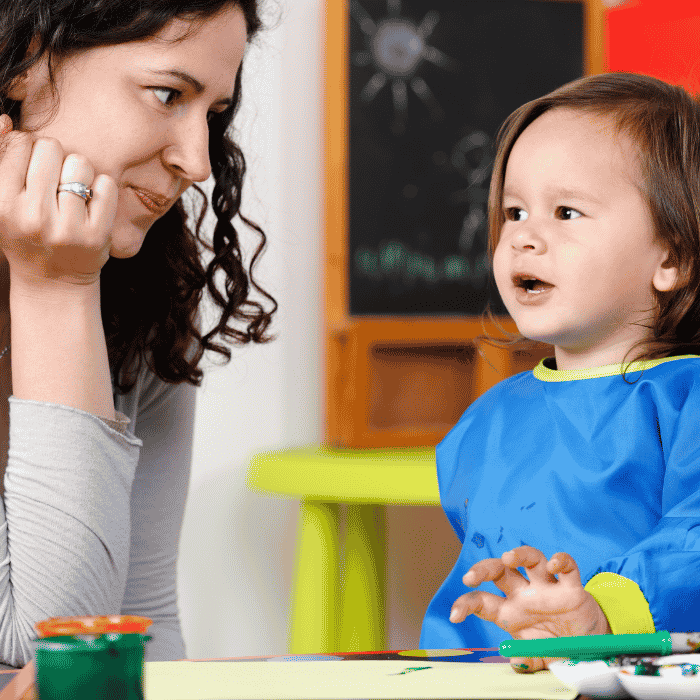
How to Play with Your 5 Year Old
- Daily reading — Read together and encourage independent reading. Provide books just above their current level — the stretch is where growth happens.
- Arithmetic in play — Coins, trading cards, fruit at snack time. Count, add, subtract. Math embedded in real activity is learned faster and retained longer.
- Art storytelling — Ask your child to draw a story, not just a picture. Sequence and narrative thinking are essential early literacy skills.
- Chapter books at bedtime — Make the switch from picture books. One chapter a night. They can hold a story across multiple sessions now
The milestones on this page are intended for educational reference only. Every child develops at their own pace — earlier or later than described here is often completely typical. If you have concerns about your child's development, please speak with your paediatrician. Bright Bean Toys does not provide medical advice.

