


What's Happening at 6 Years
Welcome to First Grade! This year, your child is ready to make some serious leaps and bounds in the arts and academics departments. Greater attention to detail means art, music, and writing will be used to express feelings and tell stories. You'll see them respond more thoughtfully to experiences and discoveries.
Exploration, driven by curiosity, begins to resemble the methodical structure of scientific experimentation. Familiarity with numbers will increase significantly, and simple arithmetic functions are all but mastered throughout the year. Your six-year-old is also learning how to co-exist with others, working, playing, and collaborating with increasingly sophistication.
Starting Grade 1 is a big deal. A lot more will be demanded of your little one's academic mind this year. Luckily, it's around this age that children's language skills develop to a point where information learned through speech and reading is more easily grasped and retained. Six-year-olds will read both for pleasure and to learn — and may become obsessively interested in one subject for a short time before moving to the next.
What's Developing Right Now
The highlights across all three development pillars at 6 Years.

Physical
Changing directions while running, jumping, rolling — movement repertoire full · Ball skills refining through practice · Organized sport, dance, gymnastics all beneficial

Cognitive
Reads independently for pleasure and to learn · Up to 20 new words per day · Curiosity now structured like the scientific method · Addition, subtraction, early multiplication understanding

Social & Emotional
Holds real conversations with adults · Eager for new roles and responsibilities · Prefers gradual change — routine still very important
6 Years Development Areas
Sensory Development
Sensory Development
Sensory processing is fully mature at this stage. Your child uses their senses with adult-like precision to observe, investigate, and learn. Scientific curiosity — asking what would happen if, then testing it — is sensory development at its most sophisticated.
Gross Motor Skills
Gross Motor Skills
Your six-year-old will be experimenting with all different kinds of movement. They can change directions while running, jump, roll, and shift weight rapidly from foot to foot. They can even go backward without much difficulty. They learn new ways to move by mimicking you or other children.
What you can do: Teach them to skip, gallop, slide. Enrol in organized sport, dance, or gymnastics. The physical development of six-year-olds benefits enormously from instruction and practice.
Fine Motor Skills
Fine Motor Skills
Fine motor skills at this stage are approaching adult-level precision. Writing, drawing with detail, using scissors, and working with small materials are all well within reach. The more opportunities your child has to practise these skills in meaningful contexts, the faster they develop.
Balance & Coordination
Balance & Coordination
Your child has all the rough movements for throwing, catching, and kicking. Now it's time to refine hand- and foot-eye coordination. Practice makes perfect! The more time you spend throwing and kicking a ball with your six-year-old, the better their body develops.
What you can do: Practice ball skills regularly. Both sides — throw with your non-dominant hand too. This bilateral stimulation benefits brain development as well as athletics.
Curiosity & Discovery
Curiosity & Discovery
Watch your six-year-old use a child's version of the scientific method to explore the world. At six, curiosity takes on more structure, prompting questions ("What would happen if...?") and controlled experiments to find answers. They collect data from books, images, and by asking experts — including you. Six-year-olds are much more aware of the world around them.
What you can do: Do simple experiments together. Ask "What do you think will happen?" before you start. Then "What did happen? Why?" This hypothesis-test-observe cycle is scientific thinking.
Imagination & Creativity
Imagination & Creativity
Six-year-olds love to tell stories — true stories about their day, and made-up ones. You can encourage this and help them learn to write by having them keep a story journal — one story a day, with pictures. Their musical and dramatic abilities are growing too — they can be taught to read music, and this is a good age for practical instruction in art materials.
What you can do: Start a story journal. Provide better quality art materials — coloured pencils, watercolours, fine markers. Begin music lessons if there's interest and opportunity.
Thinking & Problem Solving
Thinking & Problem Solving
Strategic thinking and independent problem solving are well established at this stage. Your child can plan multi-step approaches, learn from failure, and try again with a modified strategy. Complex puzzles, strategy games, and real-world challenges are ideal for developing this capacity further.
Academics
Academics
Starting Grade 1 is significant. Your child will read independently, for both pleasure and learning. They can acquire up to 20 new words per day. They often become obsessively interested in one subject for a short time, absorbing knowledge, before moving to the next subject. They recognize most common words automatically now. Before the end of the year, they'll write and punctuate sentences properly, know odd and even numbers, count sides to identify shapes, and understand the beginning of multiplication as adding groups.
What you can do: Keep the house full of books — fiction and non-fiction. Let them lead subject-specific deep dives. Take them to the library. The habit of independent reading formed now is one of the most powerful educational gifts you can give.
Sharing & Cooperation
Sharing & Cooperation
Social interaction has become fun. Your six-year-old enjoys sharing with friends when things are going smoothly, but conflicts still arise and can cause temporary breakdowns. With adult guidance, your child should be capable of addressing conflicts appropriately through discussion. Six-year-olds are very aware of others' feelings and can often guess what's causing an emotion.
What you can do: When social conflicts arise, help them talk through it rather than solving it for them. "What do you think she was feeling? What could you say to her?" The facilitated conversation is the learning.
Listening & Communication
Listening & Communication
At six, children can hold stimulating conversations with other children and even adults. They're much better at telling stories including detailed accounts of events in logical sequence. Your child readily asks and answers questions to keep a conversation going and will frequently initiate conversations when excited about something.
What you can do: Have real conversations about real things. News, nature, books, current events appropriate to their age. Children who discuss ideas with adults early develop vocabulary and critical thinking faster.
Self-Expression & Confidence
Self-Expression & Confidence
Six-year-olds get a thrill from new roles and responsibilities. Recruit your child to help with household tasks, cooking, or looking after younger siblings. While eager to help, they'll still need plenty of direction. Be prepared for over-confidence — children this age tend to over-estimate their abilities and do not respond well to failure or criticism.
What you can do: Assign real responsibilities. A regular chore they own completely. This sense of contribution to the household is enormously important for self-concept at six.
Security & Happiness
Security & Happiness
Your little one is most comfortable when there's a stable routine. They prefer gradual change. If change is on the horizon, make sure you're there as a source of emotional stability and support. Negative emotions may arise in all sorts of ways and your child may need help managing them.
What you can do: Preview changes well in advance. "Next week, we're going to do something new." Walk through what will happen step by step. Predictability is emotional safety for six-year-olds.
Recommended Toys & Books for 6 Years

Bright Box 4: Preschooler Problem Solving & School Readiness

Crayola 96 Page Colouring Book – K-Pop Demon Hunters

Learning Resources All Ready for First Grade Readiness Kit

Crayola 96 Page Colouring Book – Pokemon

Adventures with the Secret Explorers: Collection One: 4-Book Box Set of Educational Fiction Chapter Books Books

Adventures in Math: How to Level Up Your Math Game

LEGO DUPLO Classic Colourful Creative Box (10479) | DUPLO Classic Building Set for Ages 2+


Learning Resources All Ready for Kindergarden Readiness Kit
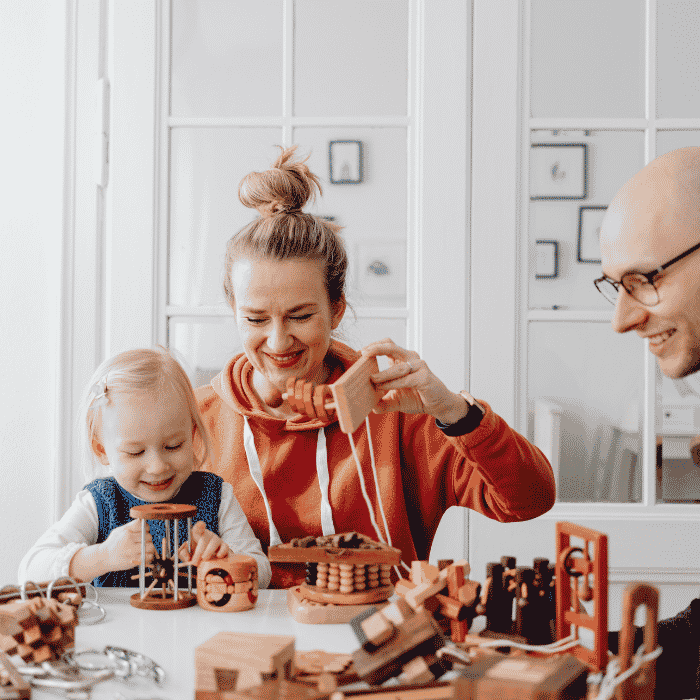
How to Play with Your 6 Year Old
- Story journal — Write and illustrate one story per day. Writing, drawing, and storytelling all in one — and you'll have a treasure to look back on.
- Science experiments at home — Your child is now a natural scientist. Simple controlled experiments in the kitchen build the hypothesis-observation-conclusion thinking pattern.
- Sports and organized activity — Enrol in sport, dance, or gymnastics. Physical development at six benefits enormously from instruction, repetition, and team dynamics.
- Independent reading — Provide books slightly above their comfort level. The "stretch read" is where vocabulary and comprehension grow fastest.
The milestones on this page are intended for educational reference only. Every child develops at their own pace — earlier or later than described here is often completely typical. If you have concerns about your child's development, please speak with your paediatrician. Bright Bean Toys does not provide medical advice.
